
5 Reasons Pavers Turn Black in Miami-Dade County
1. Algae & Mold Growth
The #1 cause of black pavers in Hialeah is organic growth. Algae and black mold thrive in Miami-Dade's humid, warm climate — particularly in shaded areas, between paver joints, and wherever moisture collects. The dark discoloration you see is actually living organisms coating the paver surface.
2. Tire Marks & Rubber Deposits
On paver driveways, hot tires leave black rubber deposits that become embedded in the paver's textured surface. Hialeah's extreme summer heat (pavement temperatures can exceed 150°F) softens tire rubber, causing more transfer to paver surfaces.
3. Sealant Degradation
Previously sealed pavers can turn black when the sealant breaks down. Degraded sealant traps moisture and dirt, creating a dark, sticky film. Miami-Dade's intense UV exposure accelerates sealant breakdown — most sealants last only 2-3 years in our climate.
4. Efflorescence
While efflorescence typically appears as white powder, severe cases on certain paver types can create dark, mineral-crusted patches. This occurs when moisture pulls mineral salts from within the paver to the surface — common in Hialeah's rainy season.
5. Embedded Dirt & Pollution
Over years, fine particles of dirt, exhaust residue, and environmental pollutants embed in paver surfaces and joints. The textured surface that gives pavers their grip also traps these particles, gradually darkening the overall appearance.
The Professional Solution
Professional paver cleaning uses specialized equipment and solutions to address all causes of blackening:
- Pre-treatment: Chemical solutions kill algae and mold at the root
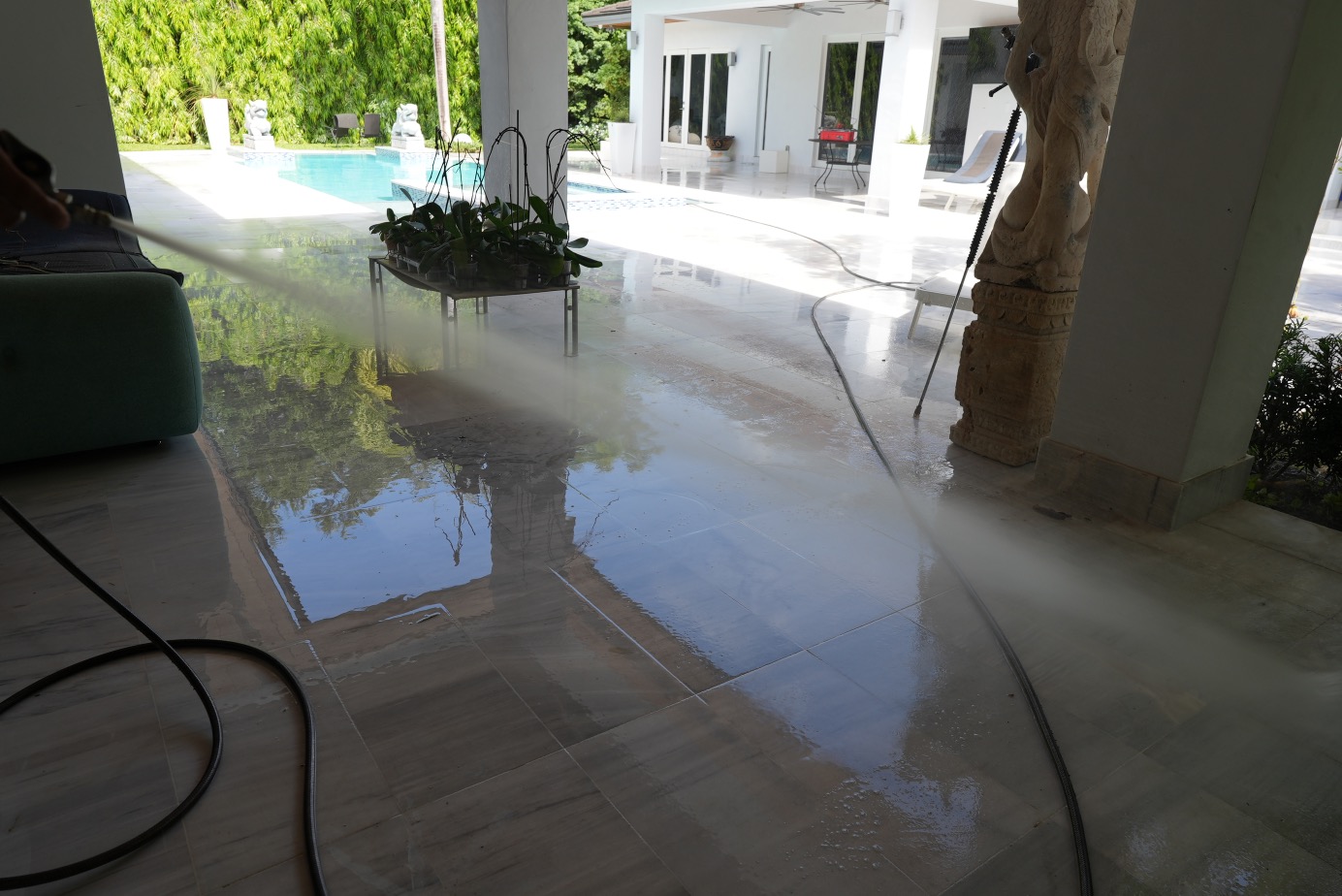
- Pressure cleaning: Surface cleaner equipment provides uniform, deep cleaning
- Joint restoration: Polymeric sand replacement prevents weed and mold growth
- Sealing: Professional paver sealing protects against future staining