
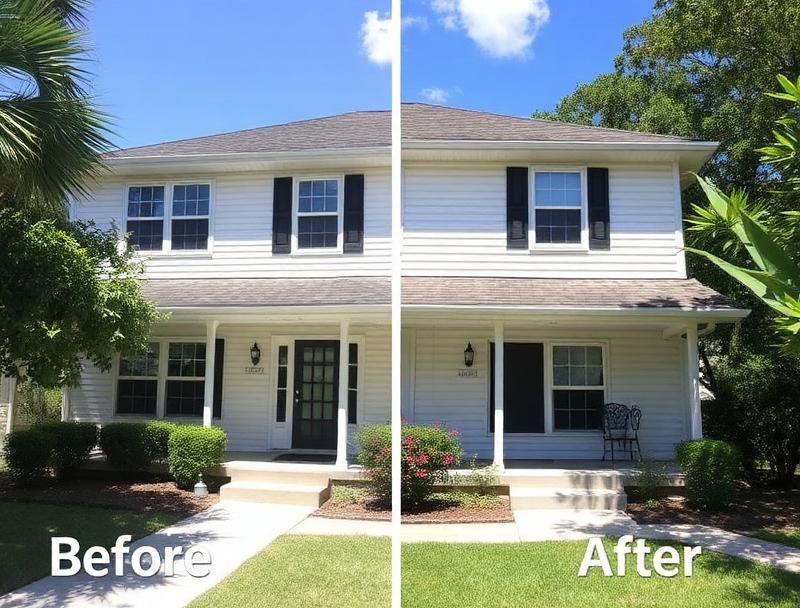
Understanding the Difference Between Pressure Washing and Soft Washing
When it comes to cleaning your home's exterior siding, the terms "pressure washing" and "soft washing" are often used interchangeably—but they're actually very different techniques with distinct applications. Understanding these differences is crucial for protecting your home while achieving optimal cleaning results.
Pressure washing uses high-pressure water (typically 2,000-4,000 PSI) to forcefully remove dirt, grime, and contaminants from surfaces. The cleaning power comes primarily from the water pressure itself, making it highly effective for hard, durable surfaces like concrete driveways, brick patios, and stone walkways.
Soft washing, on the other hand, uses low-pressure water (under 500 PSI) combined with specialized cleaning solutions to break down and remove organic growth like mold, mildew, algae, and moss. The cleaning power comes from the chemical solutions rather than the water pressure, making it safe for delicate surfaces that could be damaged by high pressure.
Which Method Is Best for Each Siding Type?
Vinyl Siding
Recommended: Soft Washing — Vinyl siding is relatively durable but can crack, warp, or become dislodged under high pressure. Additionally, high-pressure water can be forced behind vinyl panels, causing moisture damage to underlying structures. Soft washing safely removes algae and mildew that commonly grow on vinyl in Florida's humid climate.
Stucco
Recommended: Soft Washing — Stucco is porous and can absorb water when pressure is too high, leading to trapped moisture and potential mold growth inside walls. High pressure can also chip, crack, or erode stucco surfaces. The gentle approach of soft washing is ideal for stucco exteriors common in Hialeah.
Painted Wood Siding
Recommended: Soft Washing — High pressure can strip paint, splinter wood, and force water into gaps that cause rot. Soft washing cleans effectively while preserving paint integrity and wood condition. This is especially important for older homes with original wood siding.
Brick
Can Use Both Methods — Brick is durable enough to withstand pressure washing, but the mortar between bricks can be damaged by excessive pressure. For routine cleaning of newer brick, moderate pressure (1,500-2,000 PSI) works well. For older brick or heavy organic growth, soft washing is often the safer choice.
Fiber Cement (HardiePlank)
Recommended: Low Pressure or Soft Washing — Fiber cement siding is durable but the paint finish can be damaged by high pressure. Manufacturers typically recommend cleaning at no more than 1,500 PSI from at least 12 inches away. Soft washing is generally the safer option.
Why Soft Washing Often Produces Better Long-Term Results
One of the biggest advantages of soft washing over pressure washing for house siding is the longevity of results. When you pressure wash organic growth like algae and mold, you're removing only what's visible on the surface. The microscopic roots and spores often remain embedded in the material, allowing regrowth within weeks or months.
Soft washing solutions are specifically formulated to kill organic growth at the root level, not just wash it away. This means your siding stays cleaner longer—often 2-3 times longer than pressure washing alone. In Florida's humid climate, this difference is particularly noticeable.