
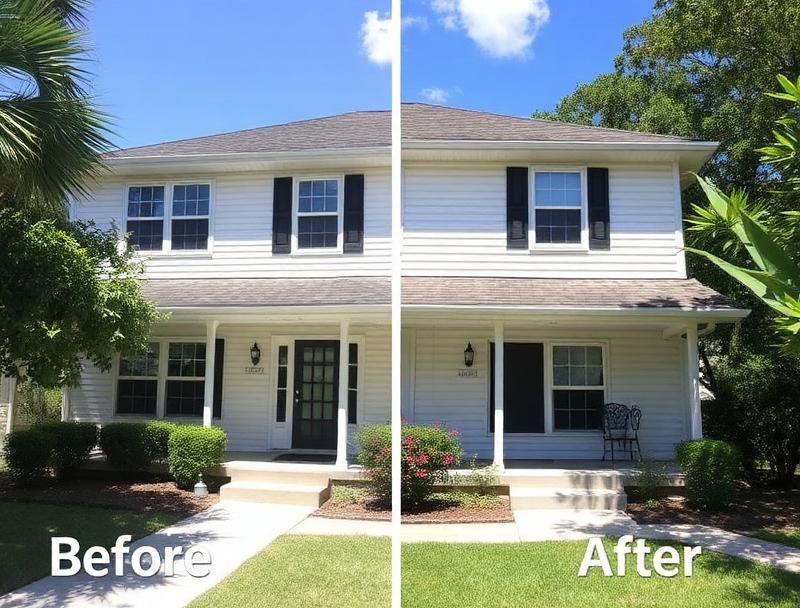
Essential Equipment for DIY House Pressure Washing
If you've decided to tackle house pressure washing yourself, having the right equipment is essential for safety and effectiveness. Here's what you'll need:
Pressure Washer Selection
For house siding, you'll want a pressure washer that delivers 1,500-2,500 PSI. Higher isn't better—in fact, using too much pressure is the most common DIY mistake. Electric pressure washers in the 1,600-2,000 PSI range are ideal for most house cleaning tasks and are easier to control than gas-powered units.
- Electric (1,600-2,000 PSI): Best for vinyl siding, painted wood, stucco
- Gas (2,500-3,000 PSI): Better for larger properties, concrete cleaning
- Rental: Good option if you'll only use it once a year ($50-$100/day)
Essential Accessories
- 25° or 40° nozzle tips: Never use 0° (red) or 15° (yellow) on siding
- Extension wand: 12-18 foot telescoping wand for reaching second stories
- Detergent applicator: Low-pressure nozzle for applying cleaning solution
- Garden hose (50-100 ft): Ensure adequate water supply to pressure washer
Safety Gear
- Safety glasses or goggles: Protect eyes from debris and spray
- Closed-toe shoes: Never pressure wash in sandals or bare feet
- Hearing protection: Gas pressure washers are loud
- Long pants and sleeves: Protect skin from spray and debris
- Non-slip shoes: Surfaces become very slippery when wet
Step-by-Step DIY House Pressure Washing Guide
Step 1: Preparation
- Close all windows and doors securely
- Cover outdoor electrical outlets
- Move or cover plants, furniture, and decorations
- Remove window screens
- Wet landscaping to dilute any cleaning solution
- Notify neighbors if spraying near property lines
Step 2: Apply Cleaning Solution
Using the low-pressure detergent nozzle (usually black), apply cleaning solution from bottom to top. This prevents streaking from dirty solution running down dry surfaces. Let the solution dwell for 5-10 minutes (don't let it dry) to break down organic growth.
Step 3: Pressure Washing Technique
- Work top to bottom: Dirt and debris wash down as you go
- Maintain distance: Stay 12-18 inches from the surface
- Use sweeping motions: Never hold the spray in one spot
- Spray at an angle: Avoid spraying directly into seams or gaps
- Never spray upward: Water can get behind siding
- Overlap passes: Ensures even cleaning
Step 4: Final Rinse
After pressure washing, rinse all surfaces thoroughly with clean water to remove any remaining cleaning solution. Rinse your landscaping as well to dilute any chemicals that may have drifted.
Common DIY Mistakes to Avoid
- Using too much pressure: Start low and increase only if needed
- Standing too close: Can gouge, dent, or strip surfaces
- Spraying into gaps: Forces water behind siding causing damage
- Ignoring windows: High pressure can crack or break glass
- Forgetting to protect plants: Cleaning solutions can harm vegetation
- Working in direct sunlight: Solutions dry too fast
- Using a ladder: Pressure washer recoil can cause falls